
A dramatic burst pipe gets noticed straight away. The leaks that cause the most damage are usually the quiet ones: a weeping shower seal, a loose dishwasher fitting, a pinhole in a copper pipe inside the wall. They can soak carpet, underlay and timber for weeks before there's anything obvious to see.
Where leaks usually start
- Under kitchen and bathroom vanities (flexible braided hoses fail with age)
- Behind washing machines, dishwashers and fridges with water lines
- Shower trays and tiled showers with failed seals or grout
- Hot water cylinders and their valves
- Toilet cisterns and the seal at the base of the pan
- External taps and pipes exposed to frost
Early warning signs
- A damp, musty smell in one room or along one wall
- Carpet that feels cool or slightly damp near a wet area or wall
- Skirting boards that are swelling, staining or lifting paint
- Ripples or bubbles appearing in carpet
- Laminate or vinyl starting to lift or cup at the joins
- Your water meter moving when every tap is off
- A water bill that jumps for no obvious reason
The water meter test
Turn off every tap and water-using appliance in the house. Note the reading on your water meter (usually near the front boundary), wait an hour without using any water, then check again. If the numbers have moved, you have a leak somewhere.
Canterbury winters and frozen pipes
Canterbury frosts, especially inland in places like Rolleston, Darfield and West Melton, can freeze exposed pipes. Water expands as it freezes and can split pipes, and the leak often only shows up when things thaw. Lag exposed pipes, cover external taps, and know where your toby is so you can shut the water off quickly.
Why hidden leaks cost more
A sudden burst is often covered by home insurance. Gradual damage from a slow, long-term leak is often treated differently, and many policies exclude or limit damage that happened gradually or that the homeowner could reasonably have noticed. Check your own policy wording. Either way, finding leaks early is the cheapest option by a long way.
Found a leak? Here's what to do
- Shut off the water at the toby or the appliance's isolating valve.
- Photograph the leak and the affected area.
- Call a plumber to fix the source.
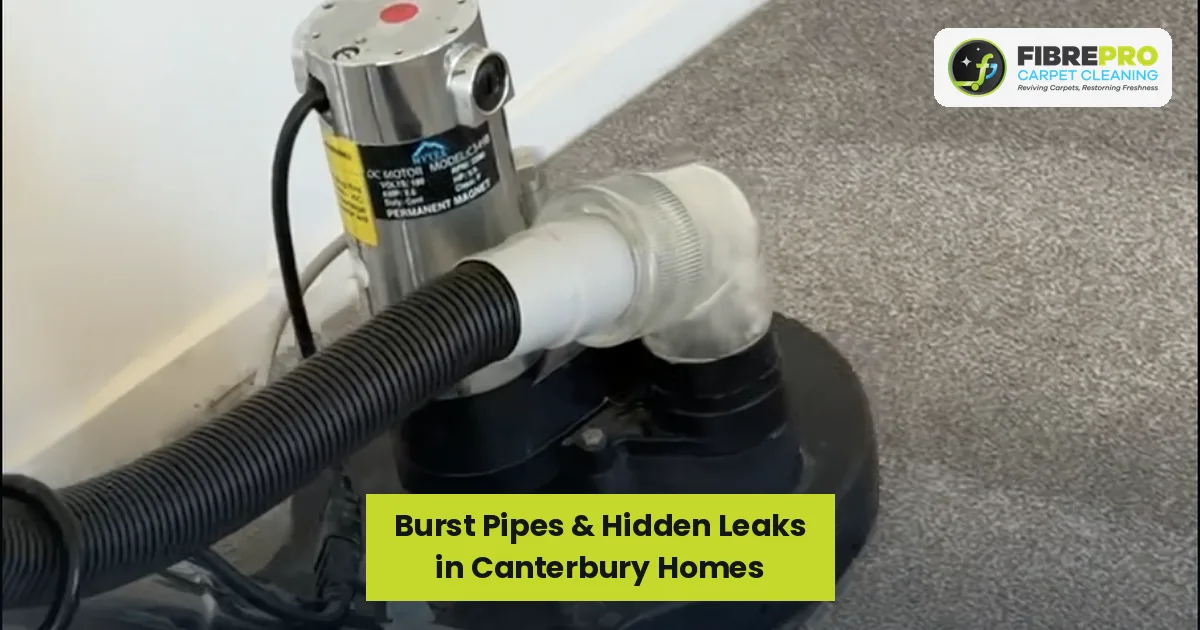
- Have the moisture checked. A restorer can measure how far water has travelled into carpet, underlay, walls and subfloor, which is often much further than it looks.
- Dry it properly. Air movers and dehumidifiers, checked with meters, stop musty smells and mould developing later.