
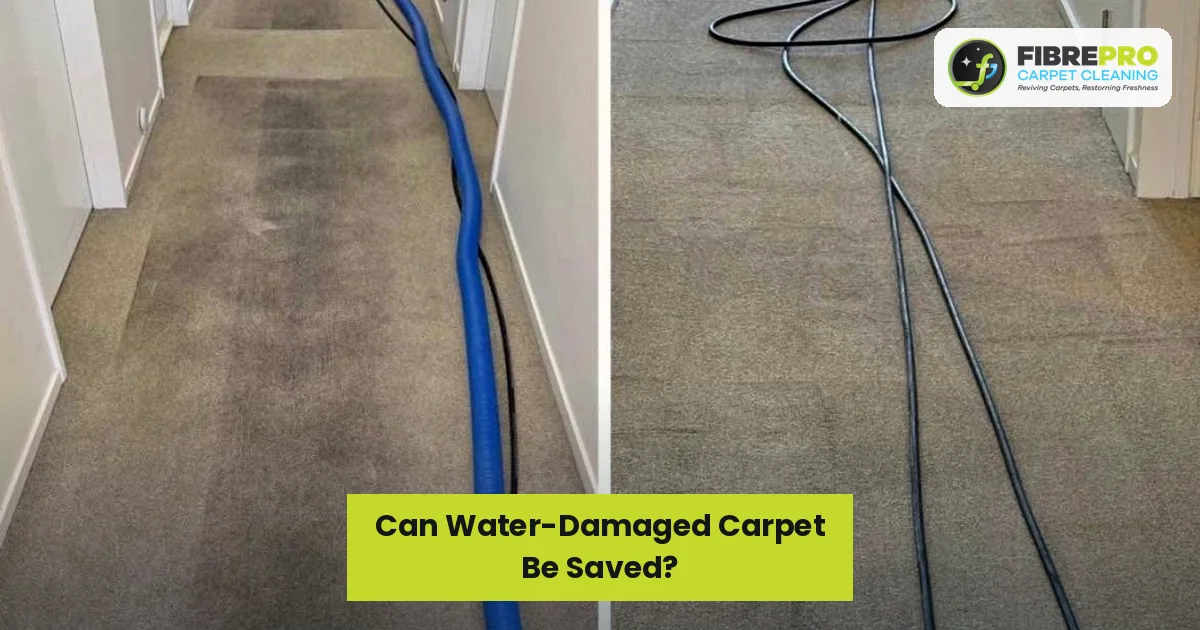
The first question most people ask after a leak is "Do I need new carpet?" Often the answer is no. Plenty of wet carpet can be extracted, dried, cleaned and re-laid. Sometimes, though, replacement is the only safe option. Restoration technicians decide using a fairly consistent set of rules, and this is how they work.
Factor 1: what kind of water was it?
The IICRC (the industry body FibrePro is certified with) sorts water damage into three categories. This matters more than anything else.
Clean water
From a supply pipe, a hot water cylinder, rain through a window or an overflowing sink with clean water.
Usually restorable if dealt with quickly.
Grey water
From a washing machine, dishwasher, shower or toilet overflow without faeces. It carries some contamination.
Carpet often restorable with cleaning and antimicrobial treatment. Underlay is usually replaced.
Black water
Sewage, or floodwater from rivers, streets and stormwater that may carry sewage, silt and chemicals.
Carpet and underlay are normally removed and disposed of for health reasons.
Clean water doesn't stay clean. After a day or two in a warm house, Category 1 water picking up dirt from carpet and underlay can become Category 2. That is one reason speed matters.
Factor 2: how long has it been wet?
Carpet is made of fibres bonded to a backing with latex adhesive. The longer it stays wet, the more likely the backing is to separate (delaminate), and once that happens the carpet can't be re-laid flat. Underlay acts like a sponge and holds water against the subfloor. Mould and musty odours tend to show up after 48 hours or so. If clean-water damage is caught within the first day or two, the odds of saving the carpet are much better.
Factor 3: what's underneath?
- Underlay: foam underlay can hold large amounts of water and is often cheaper to replace than to dry. Rubber underlay sometimes dries well.
- Subfloor: particleboard swells and can lose strength when soaked. Timber and concrete usually dry, though concrete slabs can take a long time.
- Carpet type: wool and good-quality synthetic carpets generally respond well to restoration. Older carpets with weakened backing may not survive the process.
How carpet is actually saved
- Inspect and categorise the water, and map how far the moisture has spread with meters.
- Extract as much water as possible with powerful extraction equipment.
- Lift or float the carpet so air can move underneath. Wet underlay is removed if needed.
- Dry with air movers and dehumidifiers, checking readings daily until materials reach normal dry levels.
- Clean and sanitise the carpet, using antimicrobial treatment where contamination is possible.
- Re-lay and re-stretch the carpet over new underlay where needed.
Warning signs that replacement is likely
- A sewage or river-flood source
- Carpet that has been wet for several days
- Rippling, bubbling or backing that peels away from the fibres
- Strong musty smells or visible mould
- Bleeding dyes or permanent staining
Even then, your restorer's moisture readings and photos are valuable evidence for your insurance claim.